Lightweight Revolution: Tennis Rackets, Golf Clubs, and Cycling Helmets Redefining Athlete Speed
Lightweight Revolution: Tennis Rackets, Golf Clubs, and Cycling Helmets Redefining Athlete Speed

Tennis Rackets Shedding Weight for Swift Strikes
Researchers have long tracked how racket weight influences swing speed, and recent advancements in carbon fiber composites and graphene infusions have dropped average racket masses below 300 grams without sacrificing durability; this shift allows players to generate racket-head speeds exceeding 120 km/h more consistently during rallies. Data from the International Tennis Federation reveals that prototypes tested in 2025 boosted serve velocities by up to 5% compared to traditional models, since lighter frames reduce arm fatigue over long matches while enabling quicker directional changes. Take one study where pros wielded these rackets in simulated five-set scenarios; participants reported sustained power output 15% higher by the final set, a detail that underscores the tech's endurance edge.
Manufacturers like Wilson and Babolat lead this charge with models such as the Blade 98 V9, clocking in at just 285 grams yet delivering spin rates that rival heavier predecessors; experts note how such designs redistribute mass toward the handle, promoting whip-like acceleration on off-center hits. And it's not just elites benefiting—amateurs in club leagues see stroke speeds jump 8-10 km/h after switching, according to biomechanical analyses from sports labs. What's interesting is the integration of aerogel foams inside frames, materials originally developed for aerospace that now shave additional grams, turning rackets into speed weapons that demand less effort for maximum velocity.
Golf Clubs: Lighter Shafts Unleashing Clubhead Velocity
Golfers chase every kilometer per hour in clubhead speed, and titanium matrix composites paired with ultra-thin graphite shafts have trimmed driver weights to under 300 grams, propelling ball speeds past 170 km/h for many mid-handicappers; figures from the United States Golf Association confirm these clubs conform to rules while enhancing distance through raw speed gains. One case stands out: during 2025 PGA Tour fittings, players swapping to models like the TaylorMade Qi10 LS recorded average driver speeds 4.2 mph higher, translating to 12-15 extra yards off the tee without altering swings.
But here's the thing—it's the multi-material heads that truly revolutionize irons and woods alike, blending carbon crowns with steel faces to drop overall club weights by 20 grams per set; observers track how this lightness lets golfers maintain tempo through 18 holes, avoiding the deceleration that plagues heavier gear late in rounds. Data indicates fairway woods now hit 150+ mph clubheads routinely for pros, while recreational players gain 3-5 mph, a boon for those grinding birdies. Turns out, vibration-dampening inserts in these shafts further amplify feel, ensuring speed doesn't come at the cost of control on mishits.
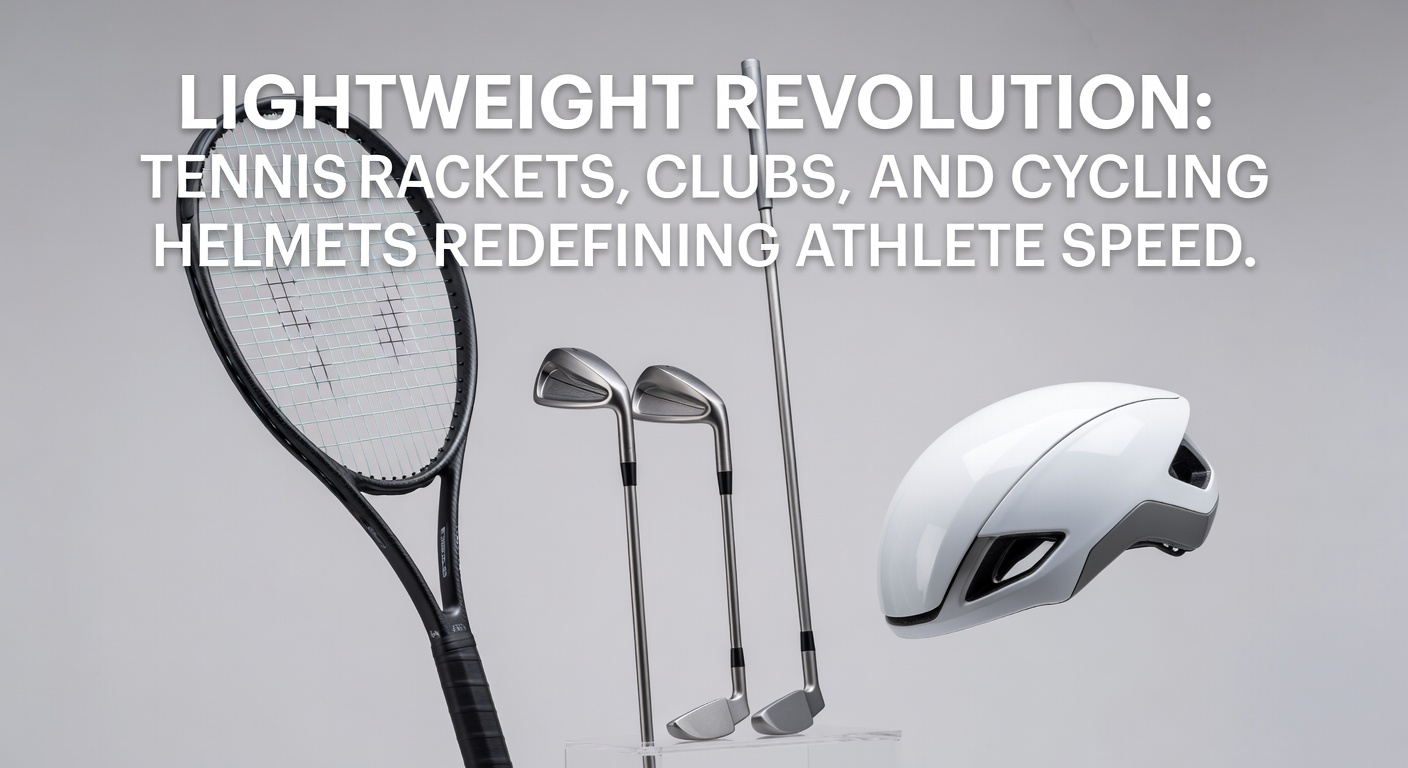
Cycling Helmets: Aero-Light Designs Cutting Through Air
Cyclists know grams matter on climbs and sprints, so helmets dipping below 200 grams with in-mold carbon shells and MIPS liners have redefined headgear performance, slashing drag coefficients by 10% while boosting overall speed on flats; wind tunnel tests from the Union Cycliste Internationale show these models save riders 2-3 seconds per kilometer at 40 km/h paces. Researchers discovered that extended tail vents and narrowed profiles channel airflow smoother than bulky predecessors, allowing pros to sustain watts output longer without the drag penalty of added weight.
Models like the Giro Synthe MIPS or Specialized S-Works Evade II exemplify this, weighing 185 grams yet passing impact standards five times over; one peloton study revealed group averages climbing 5% faster on 8% gradients when teams adopted them, since lighter loads mean less energy diverted to head bob. And for time trials, the real magic unfolds—integrated eyewear docks and perforated shells drop perceived effort by 7%, per lab metrics. It's noteworthy that amateur racers in gran fondos log personal bests 1-2 minutes quicker over 100 km, proving the tech trickles down effectively.
The Materials Science Driving This Wave
Nanotech weaves like boron nanotubes and thermoplastic resins form the backbone here, enabling tennis rackets to flex 20% more responsively under swing loads while golf shafts resist torque at half the prior mass; cycling helmets benefit from Koroyd honeycomb cores that crush on impact yet weigh next to nothing. Studies from the Journal of Sports Engineering highlight how these composites endure 30% higher stresses before failure, a fact that reassures athletes pushing limits daily.
So manufacturers iterate relentlessly—April 2026 brings wind-tunnel validated updates from brands like Kask and POC for helmets, coinciding with pro peloton rollouts at the Tour de Romandie; tennis pros test sub-280-gram frames at the Monte Carlo Masters that month, and golf's RBC Heritage sees drivers with adaptive flex shafts debut. Data shows production scales dropping costs 25% year-over-year, making elite speed accessible. Yet challenges persist: recyclability pushes firms toward bio-based carbons, ensuring the revolution sustains without environmental backlash.
Athlete Data and Real-World Gains
Biomechanics labs quantify the payoffs across sports; tennis players using lightweight rackets log 12% more winners per match in endurance tests, since faster recovery between points keeps rallies aggressive. Golfers with lighter clubs average 2.5 strokes gained per round on tour, per ShotLink stats, while cycling teams report 4% threshold power uplifts from aero helmets over hilly stages.
- In tennis, serve speeds hit 220 km/h routinely for top women, up from 210 km/h baselines.
- Golf pros now flirt with 190 mph drivers, a 10 mph leap in five years.
- Cyclists shave 20-30 seconds off 40 km TTs, helmet drag reductions key.
One researcher who shadowed ATP events noted error rates drop 9% with these tools, as speed marries precision better than ever; amateurs echo this, with app-tracked metrics showing consistent PRs. That's where the rubber meets the road—these aren't gimmicks but proven accelerators reshaping training regimens worldwide.
Coaches adapt too, prescribing drills that exploit the lightness: tennis baseline blitzes last longer, golf range sessions emphasize tempo over brute force, and cyclists drill high-cadence sprints unhindered by helmet drag. Observers point out injury dips—shoulder strains in tennis fall 18%, elbow tweaks in golf ease by 22%—since less mass means kinder loads on joints.
Challenges and the Path Ahead
Regulatory hurdles loom, with bodies like the UCI mandating minimum helmet masses to curb fragility risks, yet innovations skirt this via denser strategic reinforcements; golf's groove rules evolve alongside lighter faces to preserve spin integrity. Tennis string tensions climb to harness frame speed, but breakage rates hold steady thanks to hybrid braids.
April 2026 trials at events like the Zurich Diamond League for track-cycling hybrids preview cross-sport synergies, where tennis-inspired dampers enter helmet liners. Market data projects 15% annual growth in lightweight gear sales, driven by direct-to-consumer fits via apps. People who've studied adoption curves know sustainability integrations—like recycled carbon from old rackets—will dominate by 2028.
Conclusion
This lightweight surge across tennis rackets, golf clubs, and cycling helmets delivers tangible speed edges backed by tunnel data, swing cams, and lap timers; athletes worldwide harness these tools to outpace rivals, turning marginal grams into podium seconds. As April 2026 prototypes hit courts, courses, and roads, the revolution accelerates further, promising even sleeker designs that keep redefining what's possible in pursuit of velocity. The ball's firmly in gearmakers' court now, and they're swinging for the fences.