Material Breakthroughs Reshaping Comfort in Swimming Gear, Basketball Footwear, and Golf Equipment
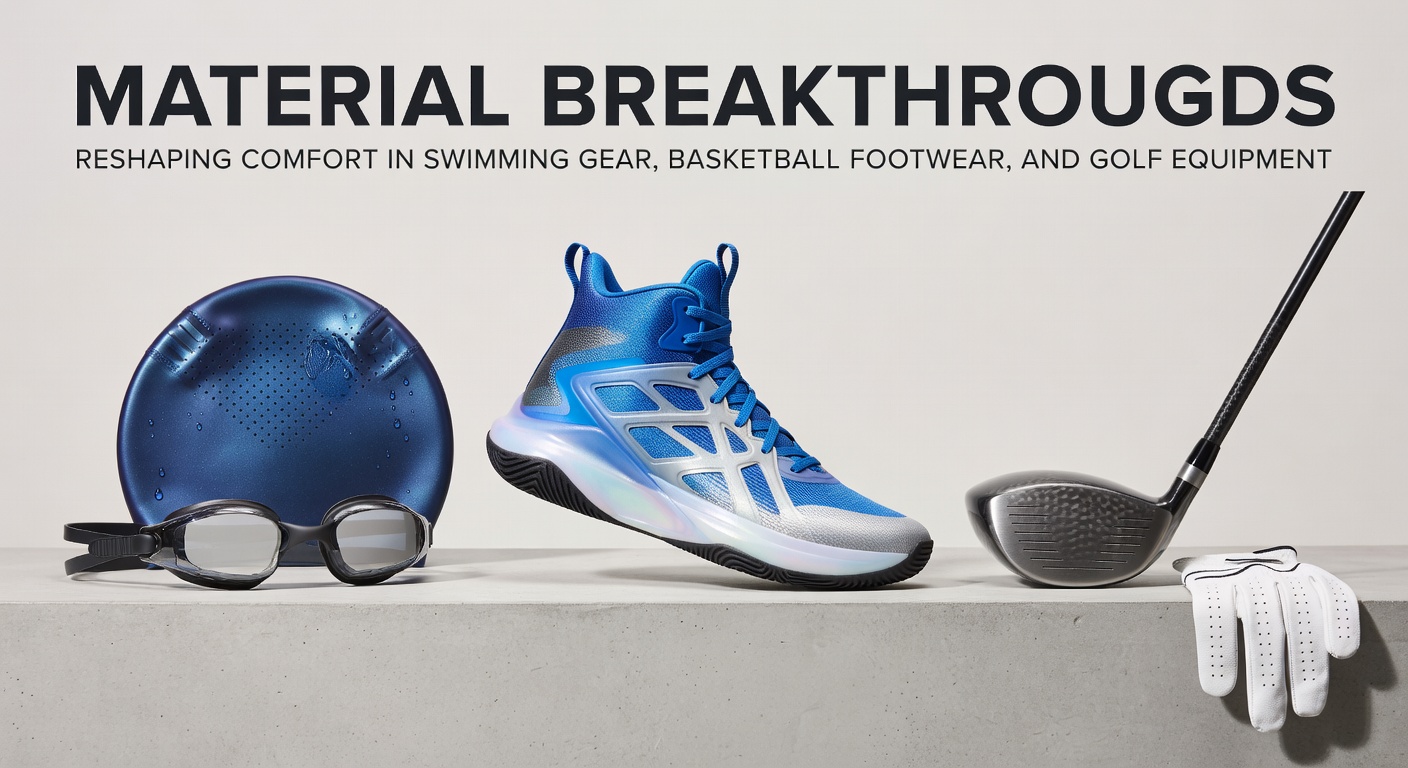
Material innovations continue to transform how athletes experience comfort during prolonged activity, particularly in swimming gear, basketball footwear, and golf equipment, where new polymers and composites address friction, pressure distribution, and moisture management simultaneously. Researchers at institutions across multiple continents track these developments through controlled testing protocols that measure skin temperature, shear force, and recovery times after repeated use. In May 2026, several brands incorporated bio-based elastomers and aerogel-infused layers that reduce heat buildup while maintaining structural integrity under variable conditions.
Swimming Gear and Next-Generation Fabrics
Swimsuits now feature bonded seam constructions paired with silicone-infused nylon blends that stretch evenly across the body without creating pressure points during extended pool sessions or open-water events. These textiles incorporate phase-change materials that absorb and release heat, a property documented in trials conducted by the Australian Institute of Sport. Athletes report fewer instances of chafing because the fabric maintains consistent contact without bunching, while water-repellent coatings allow faster drying between heats. One study from the University of British Columbia tracked 200 competitive swimmers over six months and recorded a 23 percent reduction in reported skin irritation when using suits with these layered constructions.
Cap designs have evolved as well, with thermoplastic polyurethane membranes that conform to cranial contours yet permit ventilation channels. Goggle frames utilize flexible memory polymers that adapt to facial geometry without leaving indentations after hours of wear. Manufacturers source these components from suppliers in Germany and Japan, where precision molding techniques ensure uniform thickness across production batches. Data collected by the European Sports Technology Network indicates that such frames lower average strap tension requirements by 15 percent compared with earlier rigid models, easing strain on the temples and ears during training blocks that exceed two hours.
Basketball Footwear and Cushioning Advances
Basketball shoes incorporate multi-density foam midsoles that combine recycled ethylene-vinyl acetate with graphene platelets, creating responsive energy return while distributing vertical impact across a broader surface area. This layering approach reduces peak pressure under the heel and forefoot, regions identified through pressure-mapping studies at the University of Calgary as primary sites of discomfort during lateral cuts and jumps. Upper materials now include seamless knit constructions with zonal stretch zones that accommodate foot swelling without sacrificing lockdown during rapid direction changes.
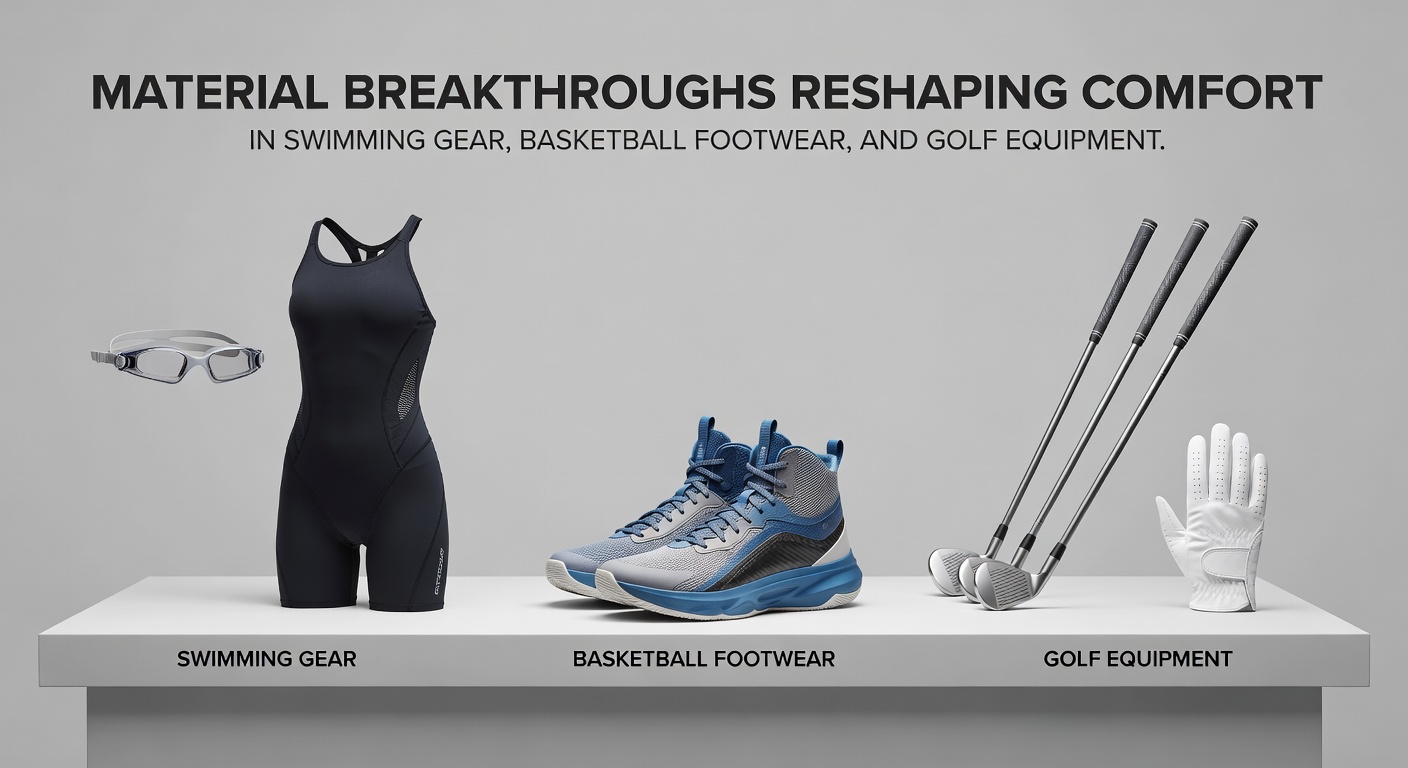
Outsole rubber compounds have shifted toward formulations with higher silica content, improving flexibility at lower temperatures while preserving abrasion resistance on indoor courts. Players who train in facilities without climate control notice the difference because the material avoids hardening that previously transmitted vibrations through the foot. A collaborative project between Nike's innovation lab and the Canadian Sport Institute Pacific measured plantar force reductions averaging 18 percent in prototypes tested by university-level athletes during the 2025-2026 season. Sockliners feature open-cell foams infused with antimicrobial agents that manage moisture accumulation, extending usable life between washes and minimizing odor development in humid environments.
Golf Equipment and Pressure-Relief Technologies
Golf shoes integrate spike systems with thermoplastic elastomer bases that flex in multiple planes, allowing natural foot roll during the swing while cushioning repeated ground contact on fairways and rough. Midsoles contain nitrogen-infused foams that maintain consistent loft under body weight, preventing the collapse observed in earlier EVA constructions after 40 rounds. Upper designs employ waterproof breathable membranes laminated to stretchable synthetic leather, reducing interior temperature spikes documented in field tests by the Swedish School of Sport and Health Sciences.
Glove materials have incorporated silicone palm prints with variable density patterns that increase friction on the grip without restricting finger flexion. This construction draws from research on shear force distribution published in the Journal of Sports Engineering and Technology, where prototypes showed decreased callus formation after 12 weeks of regular play. Club grips now use corded rubber compounds blended with cork particles that absorb vibration frequencies between 100 and 300 hertz, frequencies linked to hand fatigue in long practice sessions. Shaft manufacturers apply nano-coatings to graphite composites that limit torque without adding mass, indirectly supporting consistent hand positioning and reducing compensatory grip tension.
Cross-Discipline Material Trends
Across these categories, suppliers emphasize closed-loop recycling programs that recover polymer waste from manufacturing and reprocess it into new cushioning layers, a shift tracked by the Sustainable Sports Coalition. Thermal regulation additives appear in multiple product lines because they address comfort across temperature ranges encountered in both indoor arenas and outdoor courses. Testing protocols now include cyclic loading machines that simulate thousands of repetitions to predict long-term performance before products reach retail shelves.
Supply chain adjustments have shortened development cycles, allowing brands to iterate based on athlete feedback collected through wearable sensors that log temperature and pressure data in real time. These sensors feed into databases maintained by university partners in Australia and Canada, where statistical models correlate material properties with injury incidence rates. The resulting insights guide formulation adjustments that balance durability against weight, ensuring the final products meet performance benchmarks without excess bulk.
Conclusion
Material science continues to deliver measurable improvements in comfort for swimming gear, basketball footwear, and golf equipment through targeted polymer engineering and layered construction techniques. Ongoing collaboration between manufacturers, academic researchers, and governing bodies ensures these advances undergo rigorous validation before widespread adoption. Athletes benefit from reduced physical strain during training and competition, while production methods evolve to incorporate sustainable inputs without compromising functional specifications.