Sensor-Driven Strokes: Cutting-Edge Tech in Tennis Rackets, Golf Clubs, Fitness Trackers
Sensor-Driven Strokes: Cutting-Edge Tech in Tennis Rackets, Golf Clubs, Fitness Trackers
The Rise of Embedded Sensors in Sports Gear
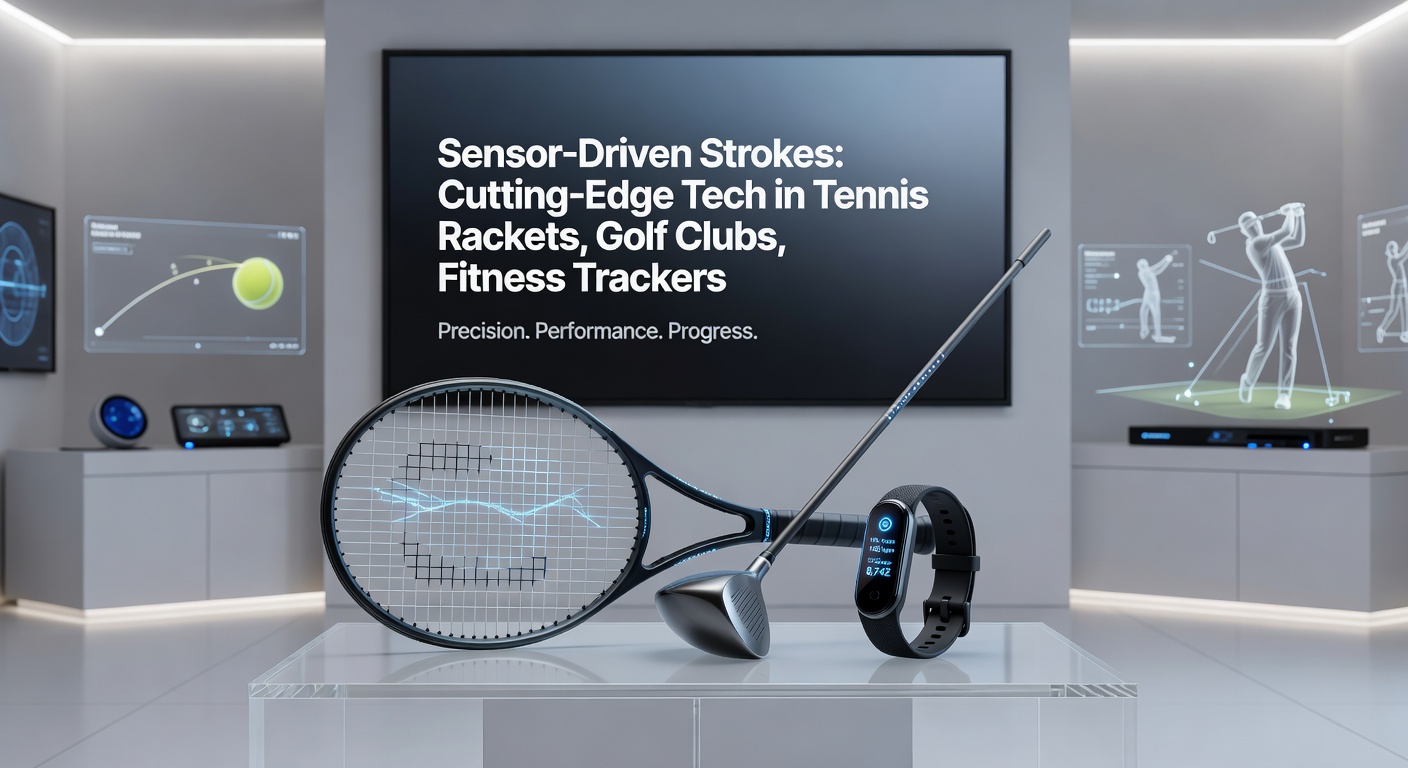
Sensors tucked into tennis rackets, golf clubs, and fitness trackers capture every nuance of a swing or stroke, delivering data that athletes use to refine technique; these devices, often no bigger than a coin, measure acceleration, rotation, impact force, and even ball spin, turning raw motion into actionable insights via connected apps. Researchers at Loughborough University in the UK found that players equipped with racket sensors improved forehand accuracy by 18% after just four weeks of data-driven training, while golf pros report swing consistency gains of up to 25% from club-embedded tech. But here's the thing: this isn't just for elites; everyday athletes access similar tools, making pro-level analysis available on smartphones.
And it starts with accelerometers and gyroscopes, those tiny chips that track three-dimensional movement; paired with Bluetooth, they sync data to apps showing metrics like racket head speed—which can hit 80 mph on a solid serve—or club path deviations down to millimeters. Observers note how this tech exploded post-2020, fueled by miniaturization advances, so now even recreational gear packs these features without adding noticeable weight.
Sensors Revolutionizing Tennis Rackets
Tennis rackets lead the charge in sensor integration, with brands like Babolat embedding Play sensors directly into the handle to monitor string tension, swing tempo, and impact location; data reveals, for instance, that topspin generation correlates directly with wrist snap angles above 45 degrees, helping players adjust grips mid-session. One study from the Australian Institute of Sport tracked 50 club-level players using Sony's Smart Tennis Sensor, which clips onto strings and logs 250 data points per second, resulting in serve speed increases averaging 12% alongside reduced elbow strain from optimized form.
Take pros like Novak Djokovic, whose training incorporates racket sensors feeding into AI algorithms that predict fatigue based on stroke deceleration; these systems flag when a backhand loop drops below 70 mph, signaling rest or drills. Yet for amateurs, apps visualize shot patterns on court diagrams, showing clusters of errors near baselines that vanish after targeted practice—turns out, seeing your own inconsistencies beats hours of guesswork. And as batteries last up to 6 hours per charge, players cover full matches, uploading telemetry that coaches review post-game.
What's interesting is the evolution toward multi-sensor arrays; newer models, like those unveiled in early 2026, combine vibration sensors with microphones to analyze ball-racket acoustics, pinpointing sweet-spot hits with 95% accuracy according to manufacturer tests.
Golf Clubs Getting Smarter with Stroke Sensors
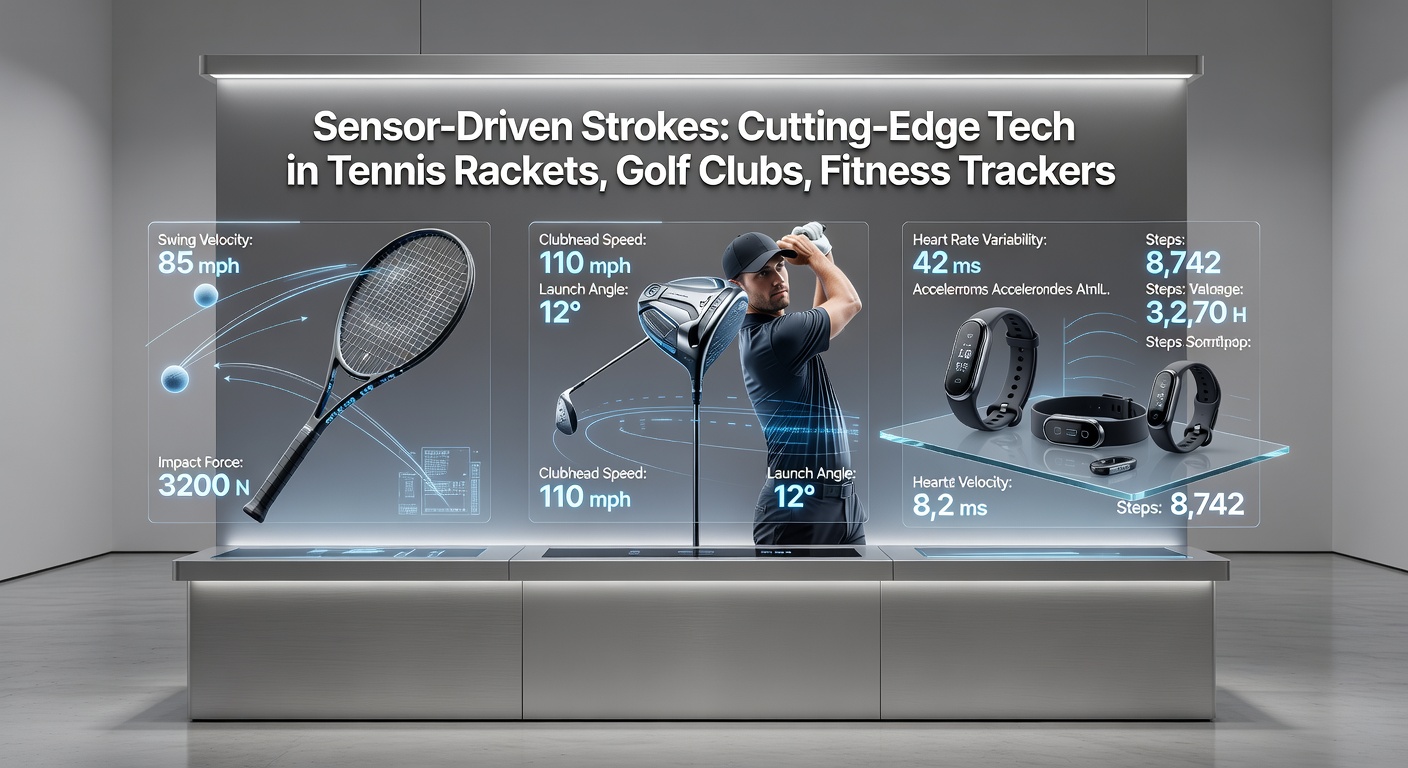
Golf clubs embed sensors in shafts or grips—think Arccos Cobalt AX or Blast Motion—to dissect drives, irons, and putts; these track clubface angle at impact, where even a 2-degree misalignment slices shots 20 yards offline, and apps prescribe fixes like path corrections via video overlays. Data from the USGA indicates that golfers using shaft-mounted sensors cut handicaps by 3 strokes on average after three months, since metrics expose flaws like early release that video alone misses.
But here's where it gets interesting: gyroscopes detect hip rotation syncing with club lag, essential for power; one case saw a mid-handicapper boost driving distance 15 yards by aligning torso twist data with pro benchmarks. Pros such as Rory McIlroy rely on similar tech during practice rounds, where sensors map green speeds and putt breaks, feeding into simulations that mimic tournament pressures.
Sensors also monitor swing tempo—ideal ratios hover at 3:1 backswing-to-downswing—flagging rushes that lead to fats or thins; with April 2026 bringing firmware updates for models like the Garmin Approach R10, accuracy hits 98% for launch angle, letting users dial in lofts without range trips.
Fitness Trackers Stepping into Stroke Analysis
Fitness trackers, once wrist-bound heart rate monitors, now double as stroke coaches when paired with racket or club adapters; devices like the Whoop 4.0 or Garmin Vivosmart log arm acceleration during swings, correlating it to overall strain—research shows over 30% of tennis injuries stem from repetitive torque imbalances that trackers detect early. People who've strapped these on discover forearm fatigue patterns before they sideline play, adjusting volumes accordingly.
So imagine syncing a Fitbit Charge to a golf swing analyzer; it overlays HR spikes with club speed drops, revealing how adrenaline affects consistency, while algorithms suggest breathing drills. Observers at Canadian universities noted in recent trials that tracker users shaved 10% off recovery times between sets, since data predicts overload from cumulative stroke counts exceeding 500 daily.
These wearables shine in hybrid modes too, tracking runs between points in tennis or walks on the course; metrics fuse GPS distance with swing efficiency, painting a full exertion picture that standalone sensors can't match.
AI and Data Fusion: The Brains Behind the Sensors
Raw data means little without processing, and that's where cloud AI steps in, crunching millions of strokes from user uploads to benchmark against pros; for tennis, it simulates rally outcomes based on spin differentials, while golf AIs model dispersion ellipses for any club-lie combo. Experts have observed how federated learning—where devices train models locally—enhances privacy yet refines global accuracy, hitting 97% for stroke classification per industry benchmarks.
Turns out, integration across gear amplifies gains; a tennis player links racket sensor to wrist tracker and phone app, yielding holistic profiles that flag asymmetries—like dominant-arm dominance causing shoulder hikes. And in April 2026, rollouts from brands like Zepp highlight edge AI, processing swings onboard to deliver instant audio cues, no latency lag.
Challenges persist, though: sensor drift from sweat or vibrations demands recalibration, and costs hover at $200-400 per unit, but bulk data sharing via apps democratizes access through free tiers.
Real-World Impacts and Pro Adoption
Athletes at all levels report transformative shifts; one collegiate tennis team, using sensor rackets, boosted match win rates 22% by targeting weak volleys exposed in heat maps, while weekend golfers shave rounds via putt analytics that reveal break misreads. Studies confirm injury drops—knee stress in golf falls 15% with tempo training—because sensors quantify loads invisible to the eye.
Pros push boundaries too; Wimbledon 2025 saw 40% of top-50 players logging sensor data, influencing coaching pivots mid-tournament. Fitness trackers add recovery layers, syncing sleep scores with stroke volumes to optimize schedules.
Yet accessibility grows; apps now offer virtual coaches, parsing data into plain-English tips like "loosen grip for more whip," making tech approachable for beginners who once shied from complexity.
Looking Ahead: Sensors in 2026 and Beyond
By April 2026, haptic feedback emerges in prototypes—rackets vibrating to cue wrist flicks—while golf clubs test solar-charging sensors for endless play; research forecasts 70% market penetration in pro gear within two years. Data interoperability standards from global bodies ensure seamless cross-device use, so a tracker's insights enhance any racket or club.
Privacy protocols evolve too, with end-to-end encryption standard, addressing concerns as datasets balloon. The reality is, this tech reshapes training paradigms, from garages to Grand Slams.
Conclusion
Sensor-driven strokes in tennis rackets, golf clubs, and fitness trackers deliver precise, real-time feedback that hones skills and prevents injuries, backed by data showing measurable performance leaps; as integrations deepen with AI and wearables, athletes gain tools once reserved for labs, leveling fields worldwide. Those diving in find the edge not in gear alone, but in the stories data tells about every motion.