Southeast Asian Production Networks Connecting Golf Grips, Soccer Cleat Traction, and Yoga Mat Textures
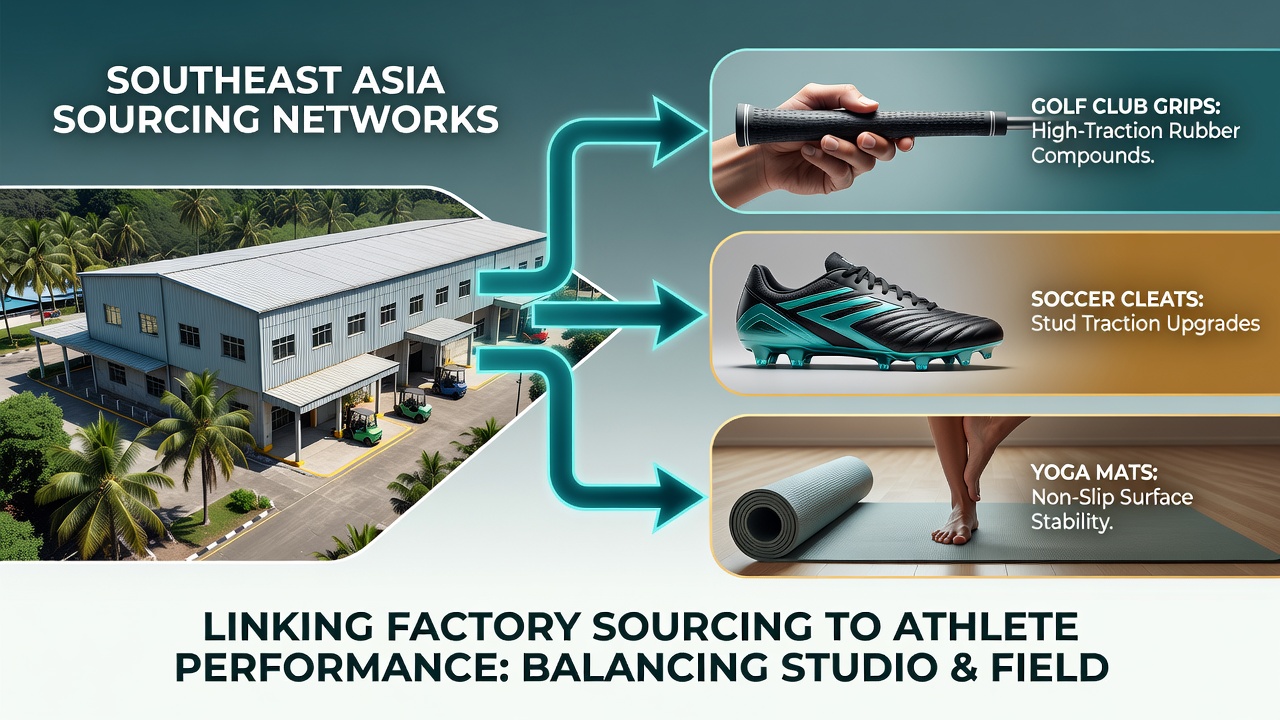
Factory networks across Vietnam, Indonesia, and Thailand coordinate material flows that tie golf club grip production to components used in soccer cleats and yoga mat surfaces. These connections emerge from shared suppliers of natural rubber, thermoplastic elastomers, and textured polymers that factories process in batches for multiple product lines. Trade records indicate that clusters near Ho Chi Minh City and Jakarta handle compounds meeting specifications for tackiness in grips, stud durability in cleats, and non-slip patterns in mats.
Material Pathways from Rubber Plantations to Finished Components
Plantations in southern Thailand and central Vietnam supply latex that processors convert into base polymers. Facilities in these regions mold golf grips using vulcanization techniques that adjust hardness levels for consistent hand contact. The same polymer batches often feed lines producing outsoles for soccer cleats, where formulations incorporate silica fillers to increase traction coefficients on grass and turf surfaces. Data from regional export logs shows that a single supplier can route portions of one compound run toward grip sleeves while directing others toward cleat studs, reducing separate procurement cycles for equipment brands.
Yoga mat production draws on adjacent extrusion processes in the same industrial zones. Manufacturers apply surface texturing to mat rolls using dies similar to those creating grip patterns, which creates micro-ridges that maintain friction during studio movements. Athletes who alternate between field sessions and indoor practice rely on these overlapping material traits, since the compounds resist degradation from sweat and repeated flexing across both environments. Production schedules in July 2026 reflected increased orders from brands coordinating multi-use polymer stocks ahead of seasonal equipment releases.
Factory Coordination and Component Sharing Across Product Categories
Assembly plants in Indonesia's Batam region operate parallel molding stations that switch between golf grip cores and cleat sole plates within the same shift rotations. Engineers calibrate injection pressures to accommodate varying durometer ratings required for each item, while maintaining traceability through batch coding systems. This setup allows one facility to fulfill contracts for golf brands and soccer equipment makers without maintaining entirely separate supply streams for raw elastomers.
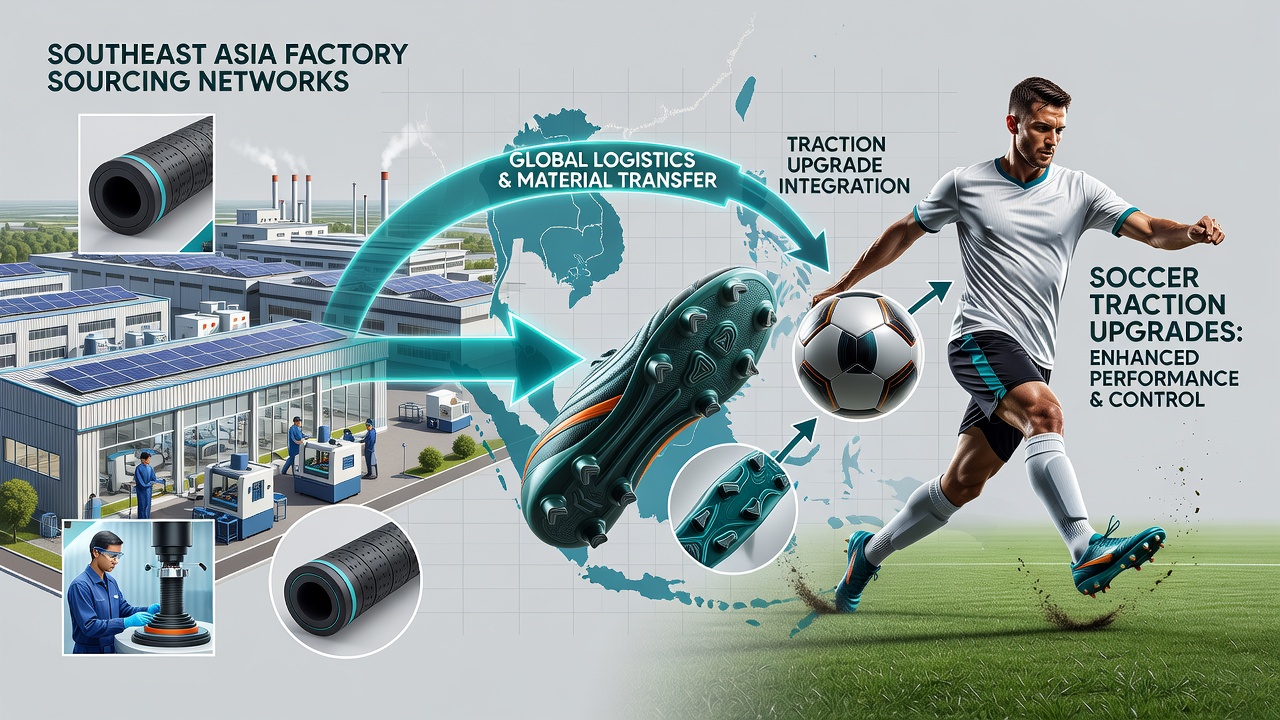
Yoga mat lines integrate into these networks through secondary finishing departments. Workers apply heat-embossed patterns drawn from the same design libraries used for golf grip textures, which streamlines tooling costs across categories. Supply chain analyses from the US International Trade Commission document how these shared processes affect import volumes of finished sports items entering North American markets. Equipment distributors track these linkages because athletes balancing studio and field routines often select items with compatible surface properties that reduce adaptation time between activities.
Regional Logistics Supporting Multi-Sport Equipment Flows
Ports in Singapore and Port Klang serve as consolidation points where containers carrying golf components, cleat assemblies, and rolled yoga mats depart on overlapping vessel schedules. Logistics providers coordinate these shipments to meet just-in-time delivery windows for brands that market cross-training collections. Customs documentation from Australian trade statistics reveals consistent patterns of polymer precursor imports into Southeast Asian facilities that later export finished goods to multiple continents.
Quality testing protocols at these sites apply similar friction and abrasion metrics to grips, cleat studs, and mat surfaces. Laboratories measure coefficient of friction values under standardized loads, which ensures that materials perform reliably whether athletes use them for club swings, directional cuts on fields, or balance poses. These standardized evaluations support the sourcing decisions of manufacturers who supply diverse product ranges from centralized production bases.
Conclusion
Production networks in Southeast Asia maintain material and process linkages that connect golf club grips with traction elements in soccer cleats and surface textures on yoga mats. Factories leverage shared polymer sources and finishing techniques to serve equipment lines used by athletes moving between studio and field settings. Trade data and logistics records continue to reflect these coordinated flows through 2026, with facilities adjusting output volumes according to seasonal demand across the connected product categories.