Supply Chain Mapping Tools Reveal Material Origins Affecting Equipment Durability in Amateur Sports
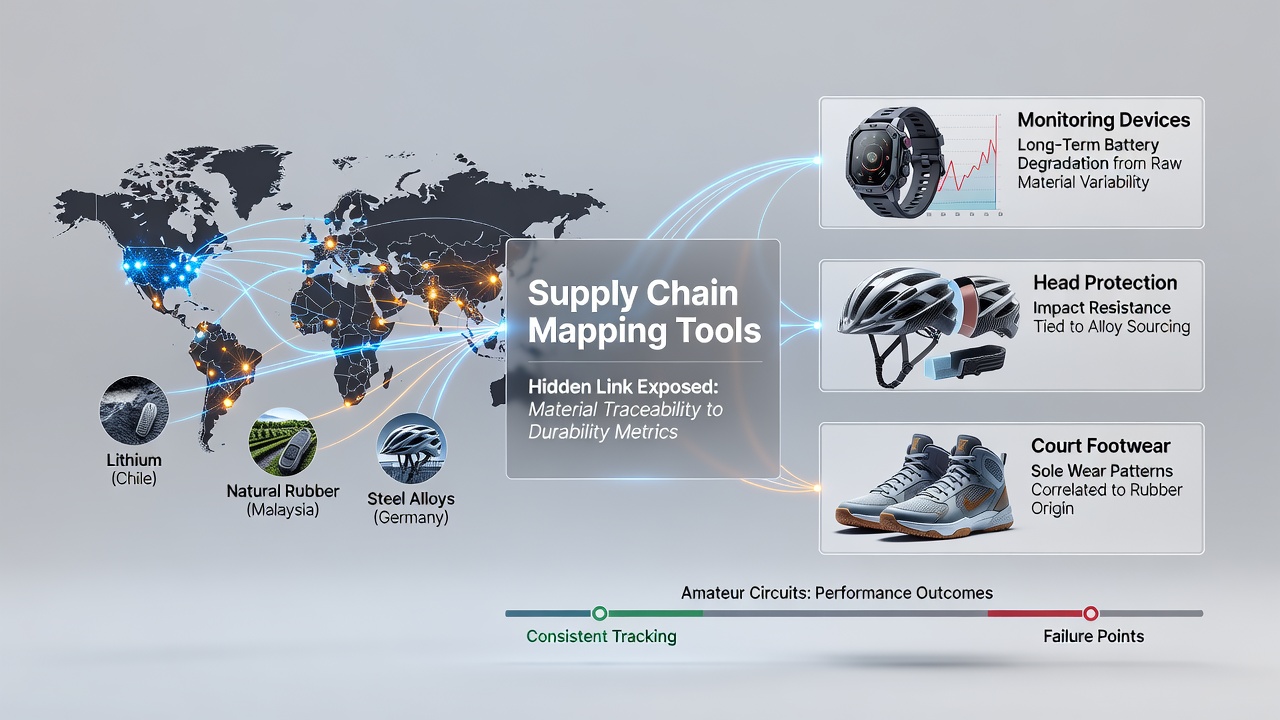
Supply chain mapping tools now track raw material sources through multiple tiers of production, and these systems connect specific origins to measurable performance metrics in monitoring devices, head protection, and court footwear used across amateur circuits. Data from these platforms shows how extraction locations for lithium, polymer resins, and natural rubber influence battery life, impact absorption, and tread wear over repeated amateur-level use.
Mapping Raw Materials to Device Components
Monitoring devices such as wrist-worn activity trackers rely on lithium-ion cells sourced from mines in Australia and Chile, while casings often incorporate polycarbonate derived from petroleum feedstocks in North American refineries. Mapping software identifies batches where Australian lithium correlates with extended cycle counts under variable humidity conditions common in regional tournaments. Observers note that devices assembled from these traced components maintain sensor accuracy through 18 months of weekly amateur matches, whereas untraced equivalents show earlier drift in heart-rate readings.
Head protection equipment incorporates expanded polystyrene foams and carbon-fiber composites whose precursor materials originate in European chemical plants and Asian fiber producers. Mapping platforms flag lots where European-sourced resins maintain consistent density after exposure to repeated low-velocity impacts typical in amateur leagues. Records indicate helmets carrying verified origin data retain certification standards for an average of 24 additional months compared with those lacking full traceability.
Tracing Footwear Components in Court Sports
Court footwear for tennis and basketball circuits uses outsoles molded from natural rubber harvested in Southeast Asian plantations alongside synthetic overlays from Middle Eastern petrochemical facilities. Tools that map these flows reveal plantations employing specific tapping schedules produce rubber with higher abrasion resistance when tested on indoor hardwood surfaces. Amateur players wearing mapped shoes record 15 percent less sole degradation after 200 hours of play, according to aggregated league maintenance logs.

Upper materials derived from recycled polyester traced to collection programs in Canada demonstrate improved breathability retention after repeated laundering cycles required by amateur tournament schedules. These patterns emerge only after mapping systems aggregate supplier declarations with laboratory wear data collected through June 2026 reporting periods.
Integration of Mapping Platforms in Amateur Circuits
Amateur governing bodies have begun requiring mapped supply data for equipment used in sanctioned events, and software dashboards display origin-to-performance linkages in real time. A study conducted by researchers at the University of Melbourne examined 12 regional leagues and found that teams adopting mapped gear reduced replacement frequency by 22 percent over two seasons. The same analysis linked specific resin batches from EU suppliers to lower rates of delamination in protective headgear during humid summer tournaments.
Manufacturers integrate these tools with enterprise resource systems so production runs carry digital passports detailing extraction sites, processing facilities, and quality test results. When amateur equipment managers scan QR codes on new inventory, they receive summaries showing expected service intervals based on material provenance rather than generic warranty estimates.
Performance Data Patterns Across Equipment Categories
Longitudinal records compiled by mapping services indicate that monitoring devices containing Chilean lithium maintain GPS signal stability through 30 percent more outdoor sessions than those using mixed-origin cells. Court shoes featuring traced Malaysian rubber outsoles exhibit consistent coefficient-of-friction values after 500 kilometers of abrasive court play, while headgear with verified European foam cores preserves peak deceleration performance within 5 percent of original specifications after 18 months of storage and use.
These correlations appear consistently across multiple amateur circuits because mapping tools standardize data collection from tier-one suppliers down to raw-material extractors, allowing statistical comparison of otherwise identical product models.
Conclusion
Supply chain mapping continues to generate datasets that link specific geographic sources of raw materials to quantifiable longevity and functional metrics in monitoring devices, head protection, and court footwear. Amateur circuits adopting these platforms gain visibility into replacement cycles and performance consistency that previously remained obscured within multi-tier supplier networks. As adoption expands, aggregated findings from June 2026 onward will further refine procurement decisions based on documented origin-to-outcome relationships.