The Biomechanical Feedback Loops That Guide Custom Modifications in Footwear, Protective Headgear, and Training Apparel for Multi-Sport Routines
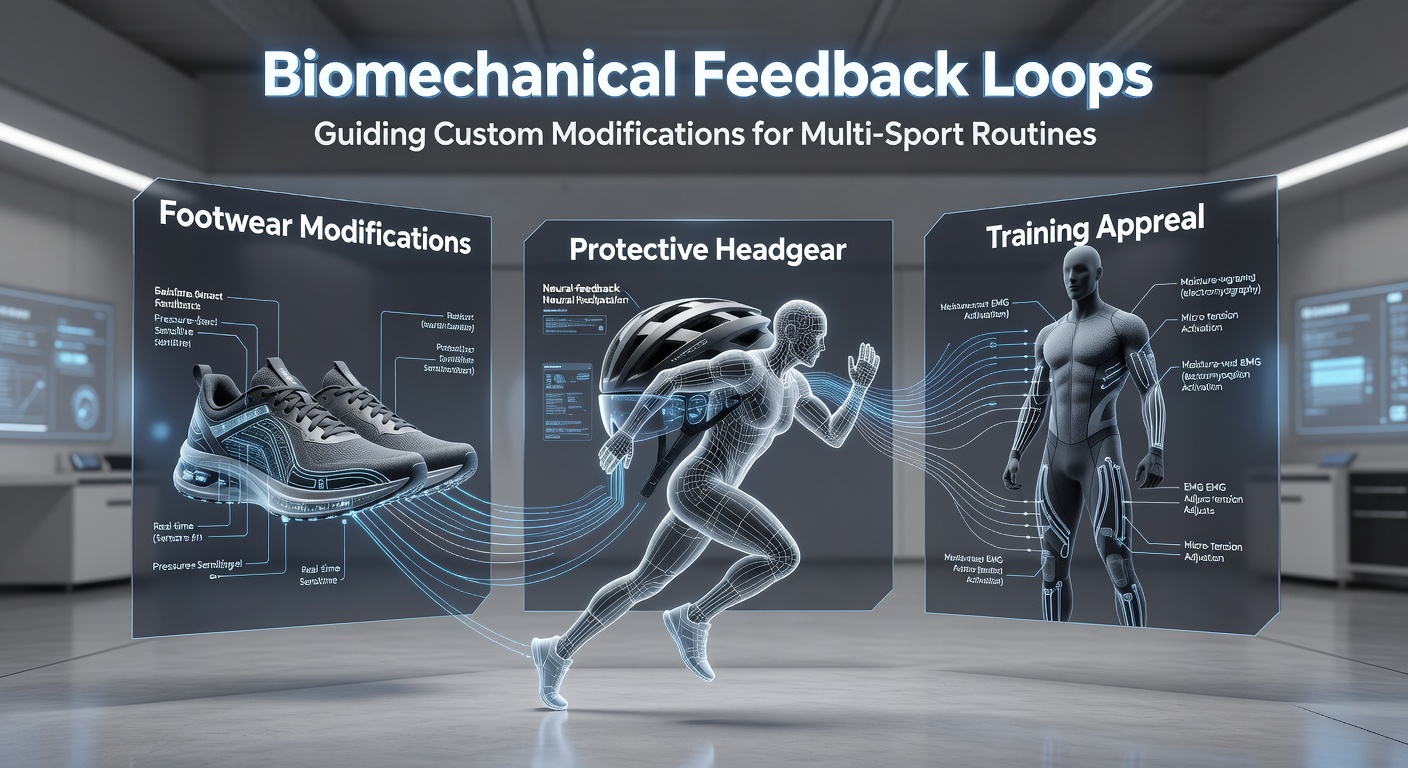
Biomechanical feedback loops operate through continuous cycles where sensors capture an athlete's movement patterns, force application, and impact forces, then relay that information back to manufacturers who refine equipment designs accordingly. These systems draw from motion analysis tools, pressure mapping devices, and wearable accelerometers that track how the body interacts with footwear, helmets, and apparel across different activities. Data collected during running strides informs adjustments that carry over to cycling sessions or court sports, creating equipment that adapts without requiring separate purchases for each discipline.
How Sensor Data Shapes Footwear Adjustments
Pressure sensors embedded in insoles record peak forces at the heel, midfoot, and forefoot while an athlete shifts between sports, and this information drives modifications such as variable-density midsoles or repositioned cleats. Studies from the Australian Institute of Sport reveal that runners who transition into soccer training show asymmetric loading patterns that custom orthotics can correct through targeted arch support additions. Manufacturers use these loops to alter cushioning compounds on a per-user basis, ensuring the same pair of shoes maintains stability when the wearer moves from track surfaces to turf fields without excessive wear concentrated in one zone.
Engineers incorporate gait analysis software that processes thousands of data points per minute, allowing for iterative changes like reinforced lateral walls that prevent ankle roll during lateral cuts in basketball while preserving forward propulsion for distance work. Observers note that these modifications reduce peak tibial acceleration by measurable margins when athletes maintain mixed training schedules, and the feedback continues as users log additional sessions that further refine the next production batch.
Protective Headgear and Impact Response Refinements
Accelerometers mounted inside helmet liners detect rotational forces and linear impacts during drills that combine contact sports with non-contact conditioning, feeding numbers back to designers who adjust padding density and shell geometry. Research conducted at the University of Calgary demonstrates that multi-sport athletes experience varied head acceleration vectors when moving from football drills to rugby practice, prompting custom-fit liners that redistribute energy absorption across specific cranial zones. As of May 2026, several equipment makers integrate real-time telemetry that updates fit recommendations after every training block, tightening retention systems or adding modular inserts based on accumulated impact profiles.
These loops also account for sweat and temperature fluctuations that alter helmet positioning over long sessions, leading to ventilation channel tweaks that maintain consistent contact without increasing overall mass. Athletes who rotate through multiple helmet-dependent activities benefit when manufacturers apply the same dataset to both training and competition versions, ensuring the protective structure responds uniformly to forces encountered in different environments.
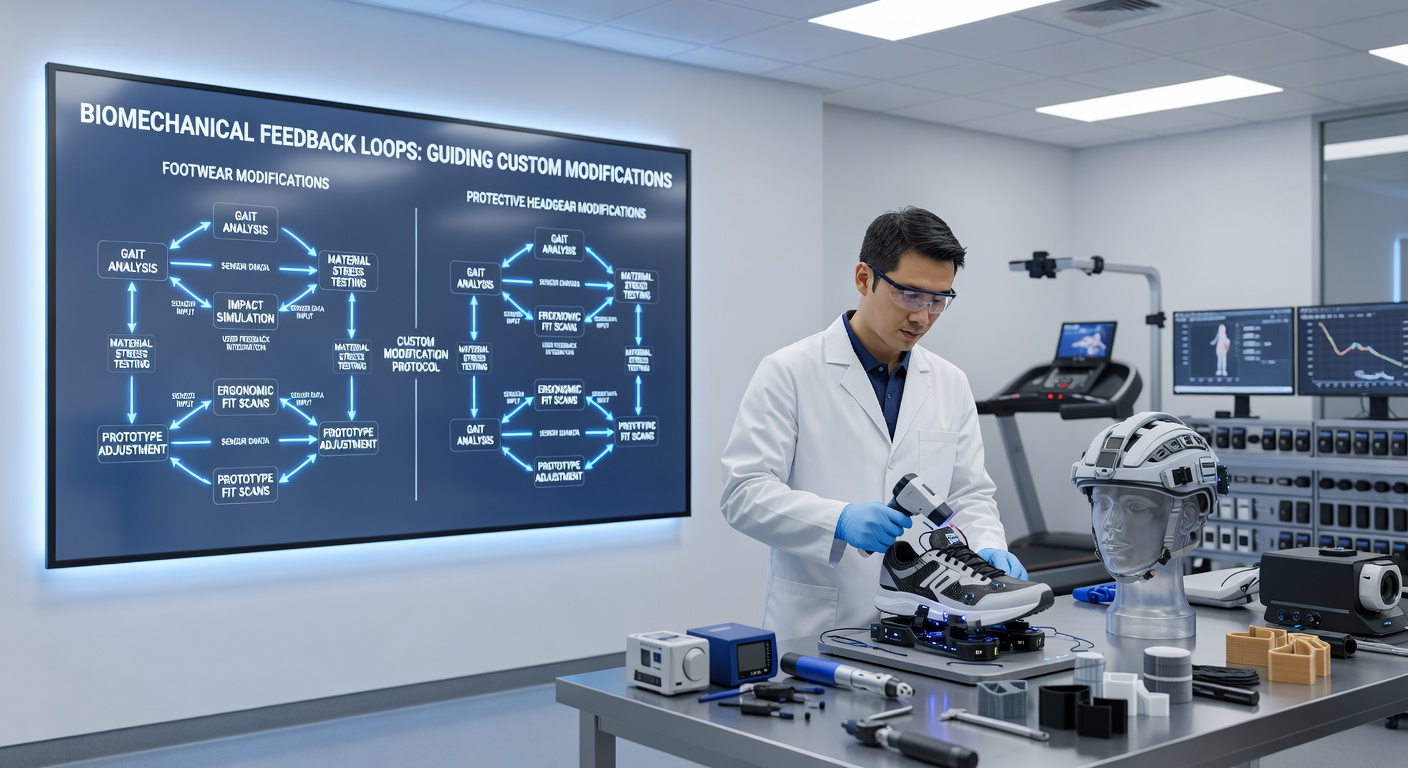
Training apparel incorporates stretch sensors and electromyography patches that monitor muscle engagement patterns while the wearer cycles through swimming, weightlifting, and agility work in a single routine. This data guides alterations such as reinforced seam placements or zoned compression panels that stabilize the torso during overhead lifts yet allow full shoulder rotation for stroke mechanics. Reports from the European College of Sport Science indicate that apparel modified through these feedback mechanisms shows improved muscle activation consistency across sessions, particularly when athletes alternate between high-impact and low-impact disciplines on the same day.
Integrating Feedback Across Multiple Sports
Multi-sport athletes generate complex datasets because their movement signatures change with each discipline, and successful custom programs synthesize information from all activities into unified modification protocols. Footwear tuned for running economy receives additional torsional stiffness elements after cycling data reveals excessive pronation during pedal strokes, while headgear padding calibrated for linear impacts gains rotational dampening layers once rugby metrics are incorporated. Apparel designers apply similar synthesis when they reposition ventilation zones based on combined heat maps from both court sports and endurance runs, preventing localized overheating that disrupts performance consistency.
Software platforms now aggregate these streams into athlete-specific profiles that update monthly, allowing small-batch production runs to reflect the latest biomechanical trends without overhauling entire product lines. Teams and individual competitors who maintain year-round mixed schedules rely on these evolving specifications to keep equipment aligned with shifting load patterns that emerge over successive training phases.
Conclusion
Biomechanical feedback loops continue to refine how footwear, protective headgear, and training apparel respond to the demands of athletes who train across multiple sports. The process relies on sustained data collection that translates raw movement metrics into targeted structural changes, producing equipment that maintains functional integrity throughout varied routines. Ongoing collaboration between sports laboratories and manufacturers ensures these modifications remain grounded in measured performance indicators rather than generalized assumptions, supporting athletes who require adaptable gear for sustained cross-disciplinary training.